 Slope & Pitch Level
Slope & Pitch Level
A level for the times the answer isn't zero — set any pitch and hit it exactly.
Download on the App Store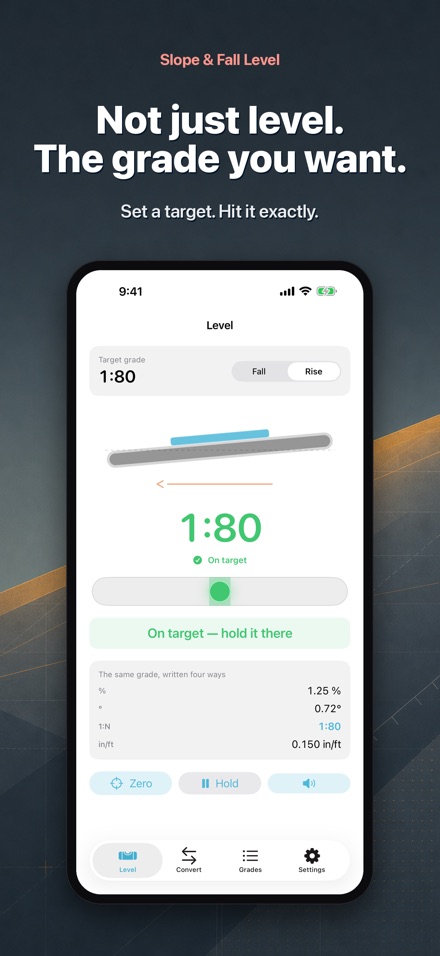
Screenshots
Features
Set the pitch you actually need
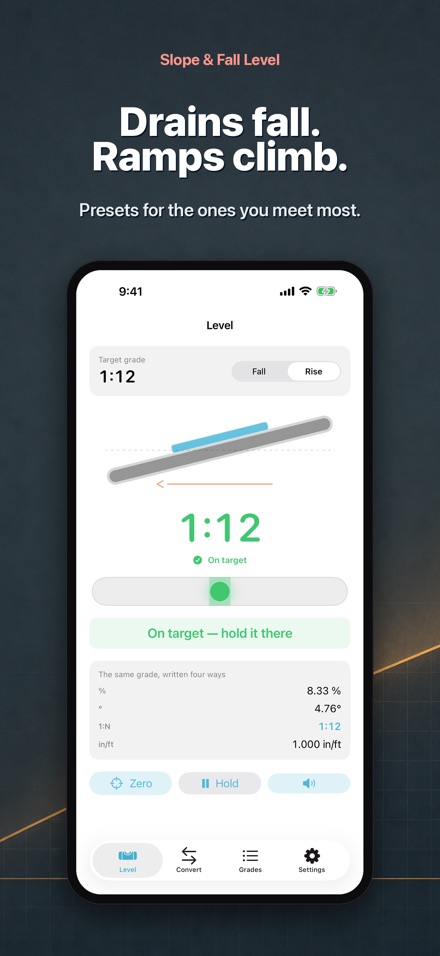
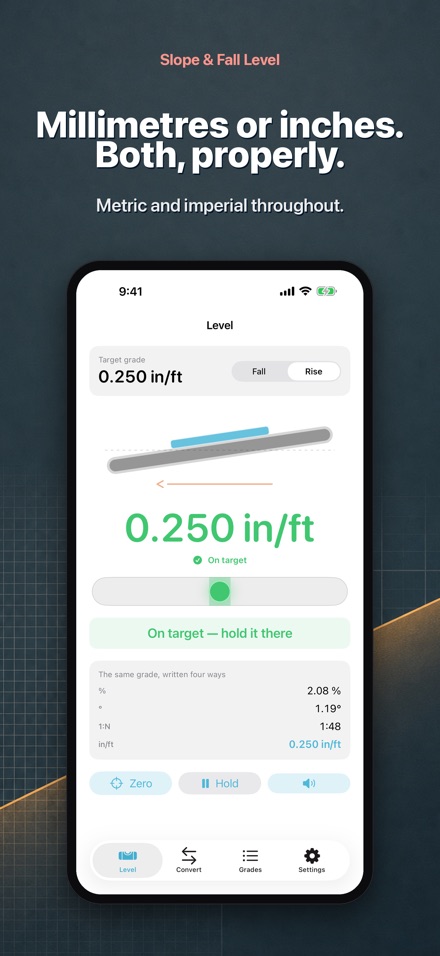
Most spirit levels only tell you whether something is flat. A drain has to fall, a ramp has to climb and a deck has to shed water. Enter the slope you want and the app shows the difference between where you are and where you want to be.
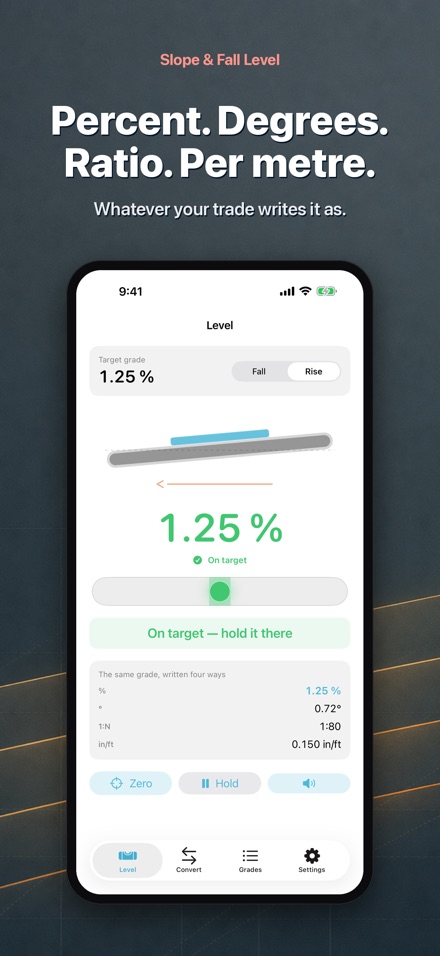
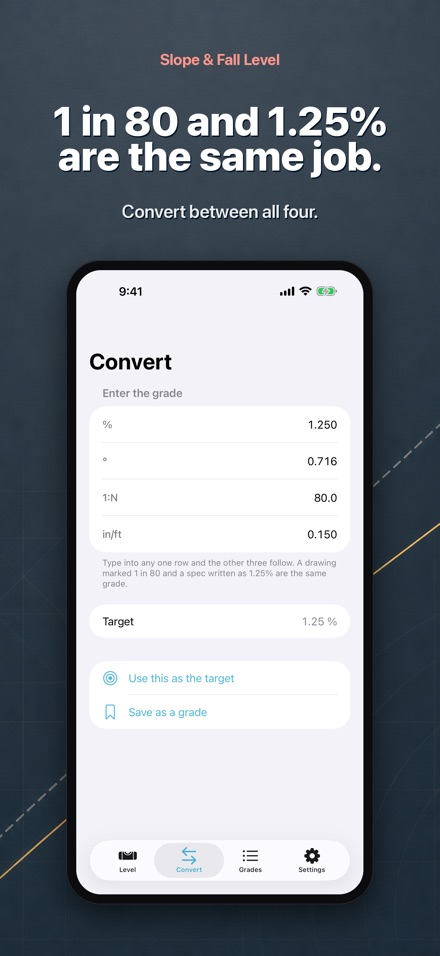
Four notations, one job
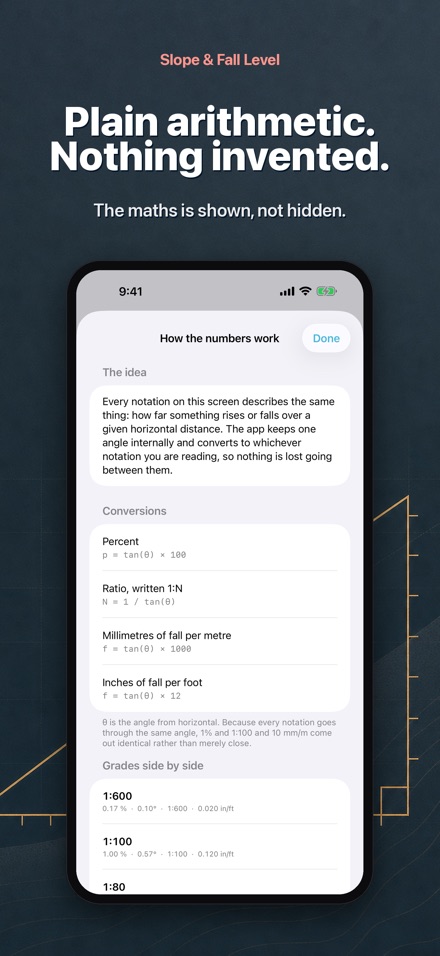
Percentage, angle, a ratio like 1:80, or a fall in millimetres per metre. The app converts between all of them, so a drawing marked 1 in 80 and a spec written as 1.25% stop being two different problems.
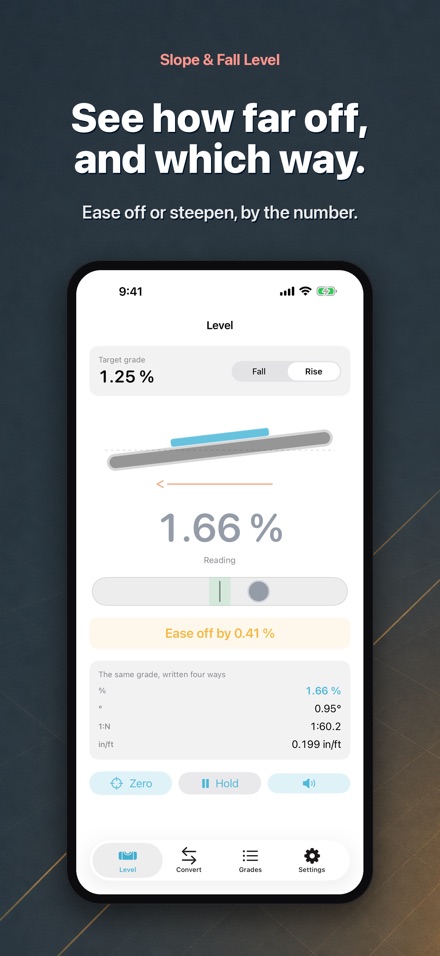
It tells you which way to move
Not just how far off you are, but whether to ease the pitch off or steepen it, and by how much.
A tone when you reach it
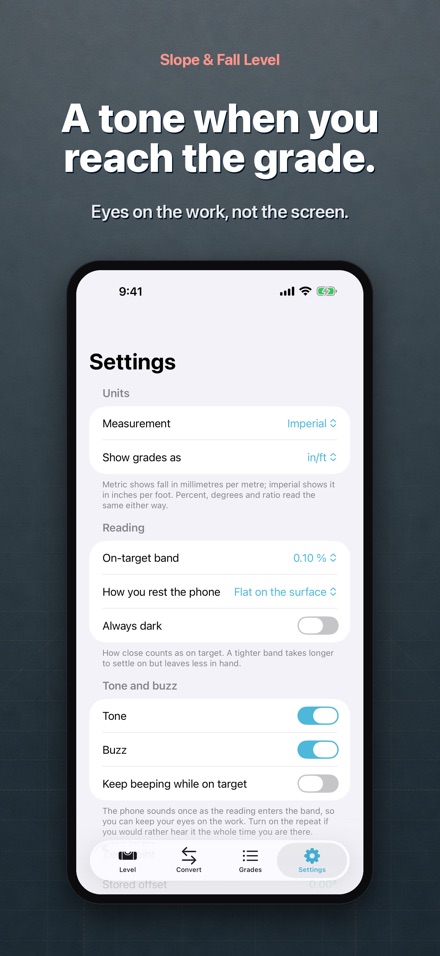
Get the slope right and the app sounds a tone and gives a short buzz, so you can keep your eyes on the work instead of the screen.
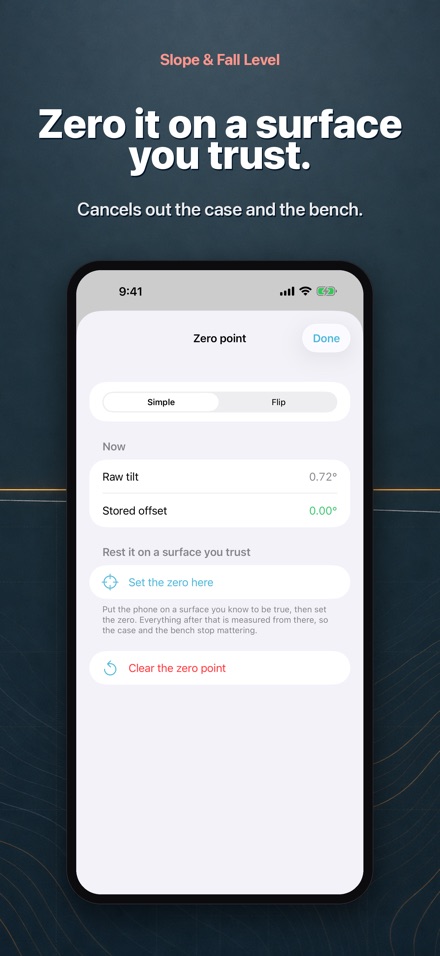
Calibrate against a surface you trust
Zeroing on a known-true surface cancels out the phone case and any bench that is not quite flat.
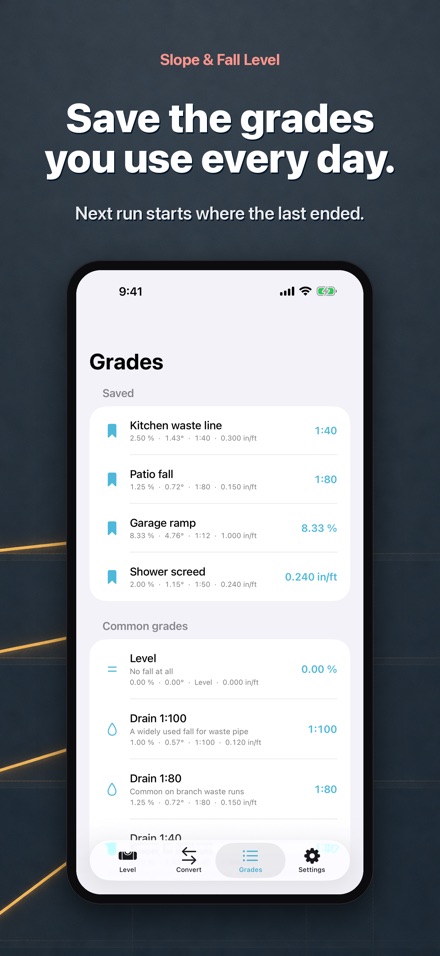
Save the slopes you use often
Drains, ramps, eavestroughs and decks are already there as presets, and you can store your own so the next run of pipe starts where the last one left off.
Most spirit levels only tell you one thing: whether something is flat. But a drain has to fall, a ramp has to climb, and a deck has to shed water. Slope & Pitch Level is built for the times the answer is not zero.
Enter the slope you want in whatever notation your trade uses — a percentage, an angle, a ratio like 1:12, or a fall in millimetres per metre or inches per foot. The app converts between all of them, so a drawing marked 1:12 and a spec written as 8.33% stop being two different problems.
Rest the phone on the pipe, the deck board, the eavestrough or the screed rail, and the display shows the difference between where you are and where you want to be. Get it right and the app sounds a tone and gives a short buzz, so you can keep your eyes on the work instead of the screen.
Calibrate against a surface you trust to cancel out the case and any bench that is not quite true. Save the slopes you use often, so the next run of pipe starts where the last one left off.
Readings come from the phone's own motion sensors, and accuracy depends on the phone lying flat and still on a straight surface. It works alongside your level and your laser, not in place of them, and any slope that has to meet a building code or a drawing — an accessibility ramp, for example — should be confirmed with the instrument that drawing was written for.